
Enjoy indoor living, outdoors.
Solar screens and zip tracks that stop the heat before it reaches the glass — measured at your opening, made to it, and fitted by the people who measured.
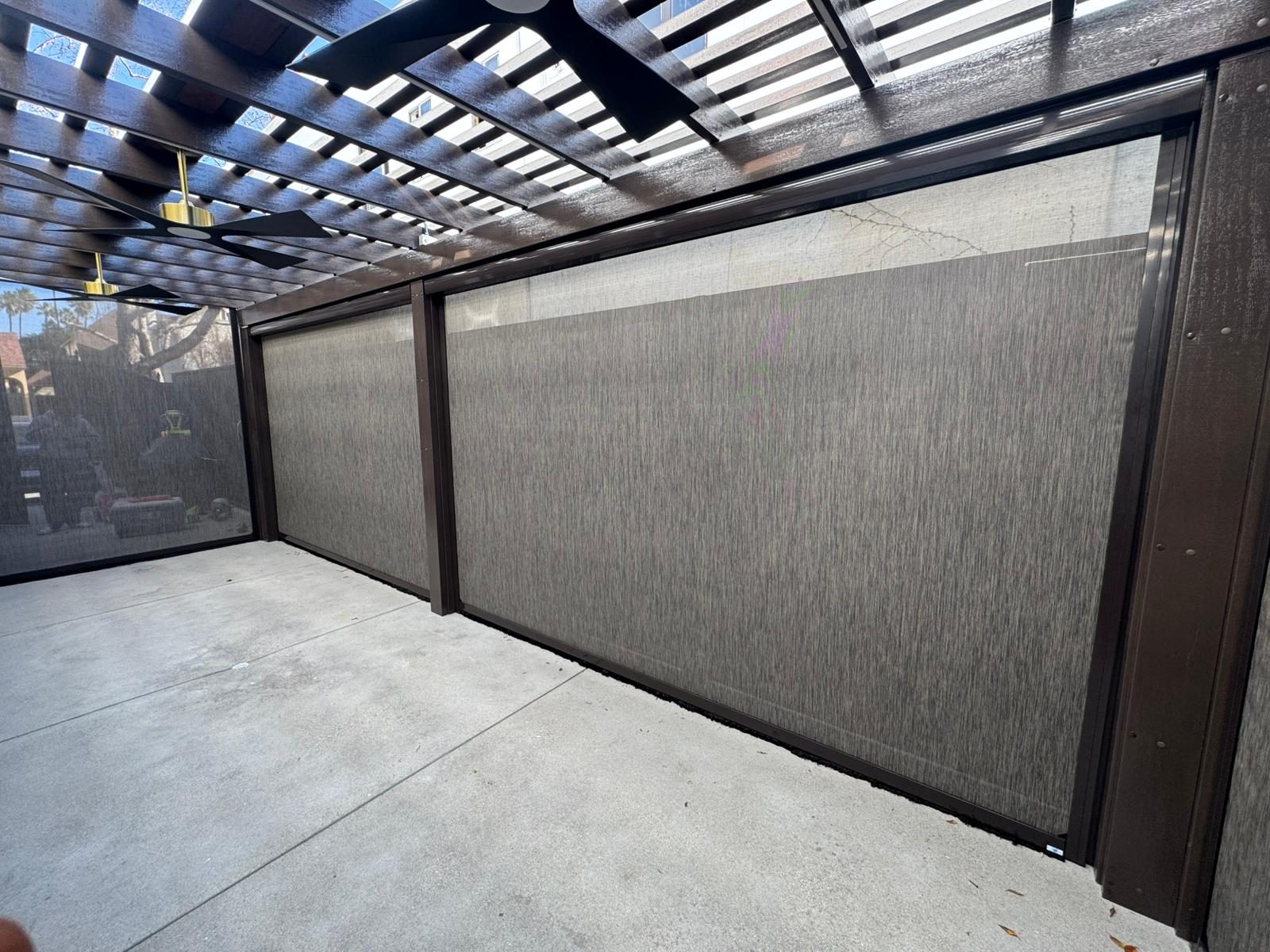
What an exterior patio shade actually is.
A woven mesh fabric that rolls down from a headbox fixed outside the glass, or across an open side of a covered patio. It is not solid and it is not glass. It stops the sun at the structure instead of at the window, and depending on how open the weave is you can still see straight through it from the shaded side.
On a patio there are two common builds. A solar screen hangs from the roller with a weighted bottom bar, sometimes guided on cables. A zip screen runs with both edges held captive inside side tracks, which is what lets it stay flat in wind. Either can be cranked by hand or motorized.
More than just an outdoor shade.
Four things a screen on the outside of the glass does that nothing on the inside can.
Heat
Caught at the glass instead of after it has already warmed the room.
Glare
A patio you can sit on at five and a television you can actually see.
Wind
Zip tracks hold the fabric captive, so a gust cannot lift or tear it.
The view
A screen, not a wall. The yard, the hills and the water all stay put.
The patio becomes a room you actually use.
Once the sun is through the glass the heat is already inside, and an interior blind is working on a problem that has already happened. A screen on the outside intercepts it at the opening — which is why the space under it stays usable through the worst two hours of a San Diego afternoon.
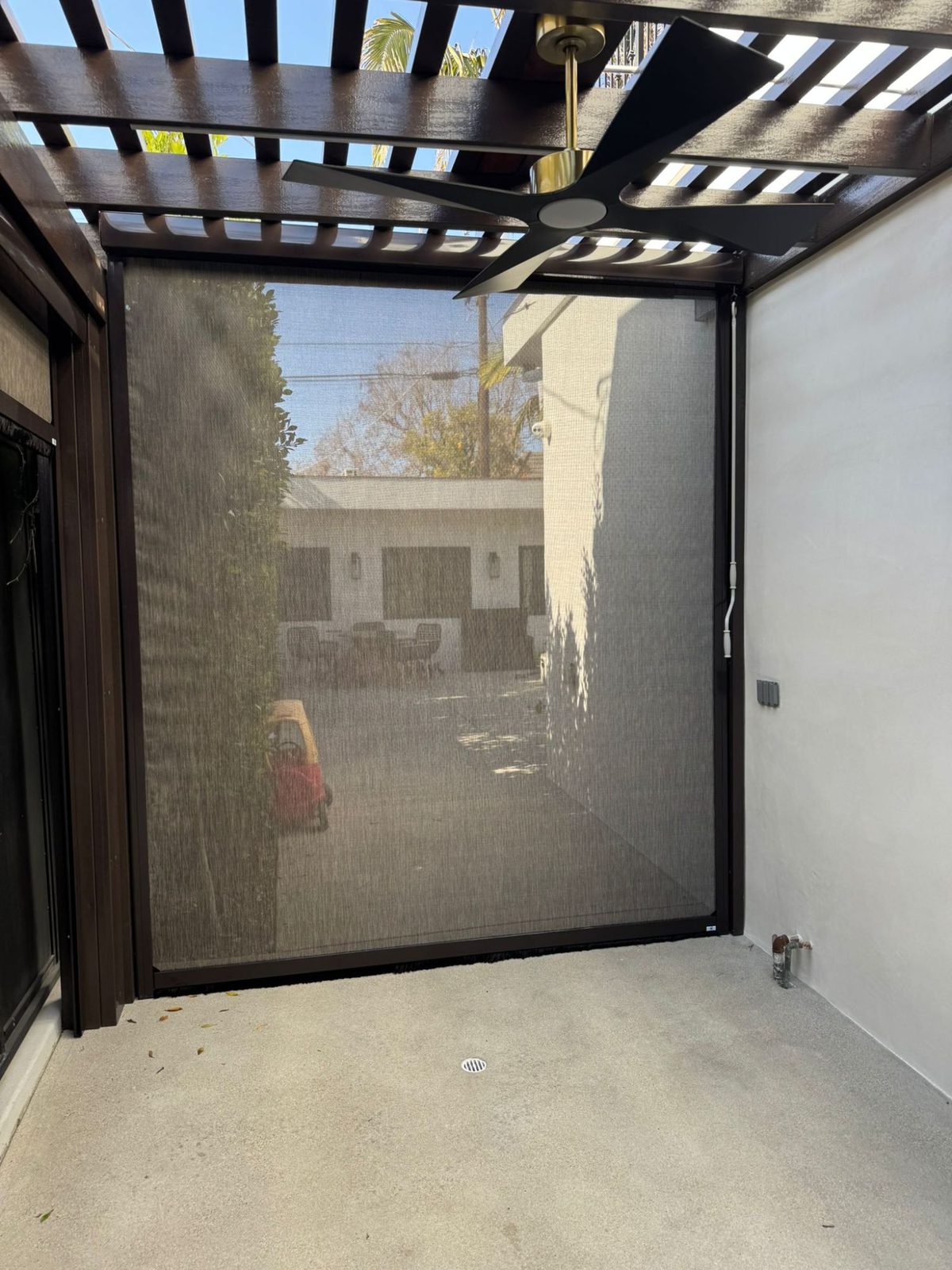
Screen down. The yard, the trees and the house opposite are all still there.
A screen, not a wall.
People expect an exterior shade to close the view down. It does the opposite of what they fear: it lifts the glare off the top of the view and leaves everything underneath exactly where it was.
If a shade has to be raised before you can see out of it, it is the wrong fabric for that window.
Openness decides what stops and what stays.
Exterior mesh is rated by how much of it is hole. These swatches carry the real open-area ratio, magnified so your eye can catch the difference between them.
3%
Most shade
A west wall that gets punished, or a patio you want usable at five. The view softens noticeably.
5%
The usual answer
Where most San Diego patios land. Heat and glare gone while the yard still reads as the yard.
10%
View first
A canyon or ocean outlook you will not trade. Takes the edge off, keeps the picture.
Width and wind are the same problem.
A shade hemmed only at the sides will lift in a breeze, swing into the posts and wear through at the edges. Side tracks are what let a wide exterior shade survive a real afternoon here.
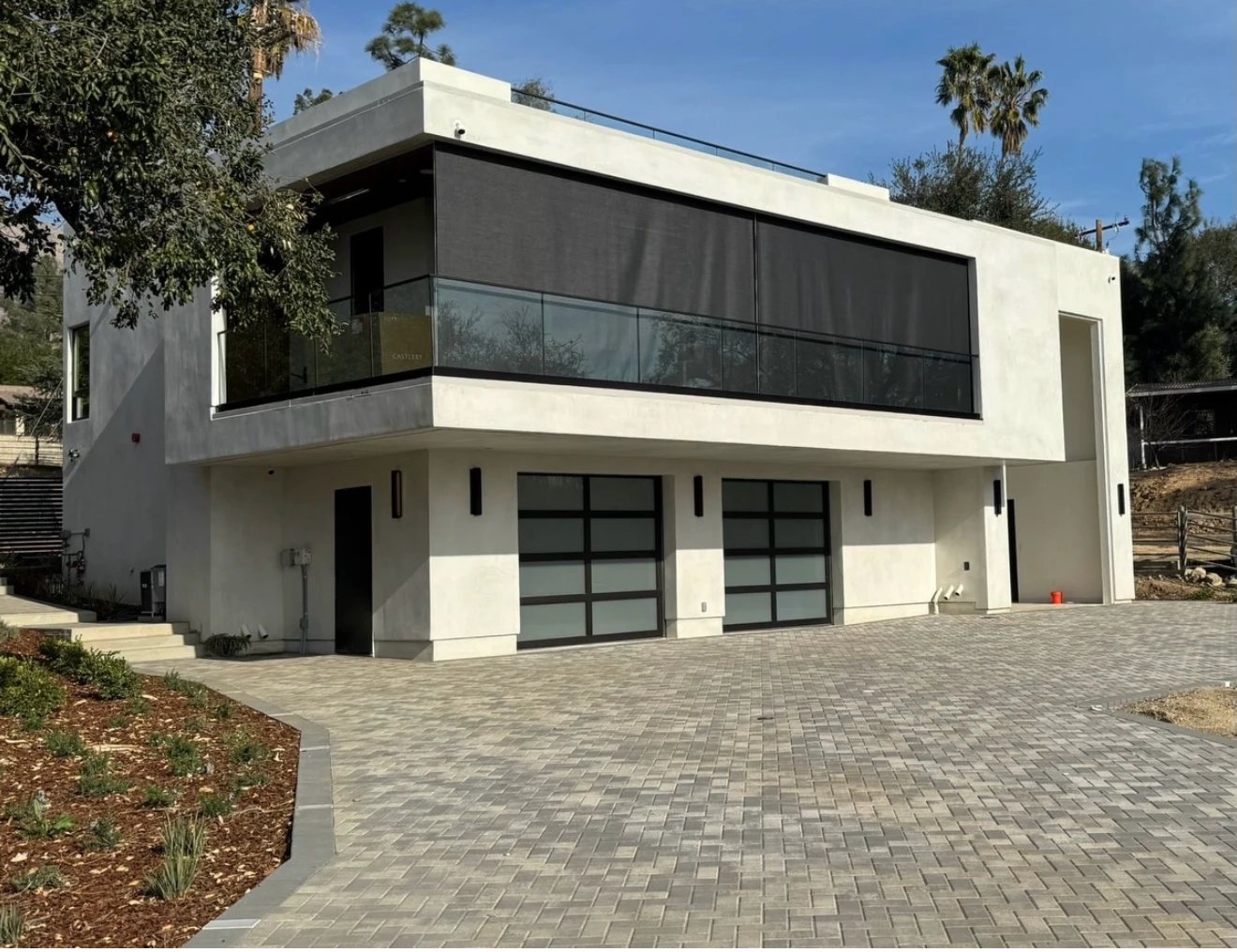
Solar screen
The open-weave mesh in the swatches above. Stops the heat and the glare, keeps the view. What most patios and west-facing windows get.
Zip screen
The same fabric, edges captive inside the side tracks. No gap at the sides, no lift in a gust. The one for an exposed patio or a wide span.
Blackout
For an opening that needs to close rather than filter — a covered patio you want to use as a room, or a window taking direct low sun.
Inside the opening, or across the face of it.
Where the shade sits decides how much it covers and how much light gets past the edges. On a patio the structure usually settles it, not preference.
Inside the opening
Across the face
Which one you end up with
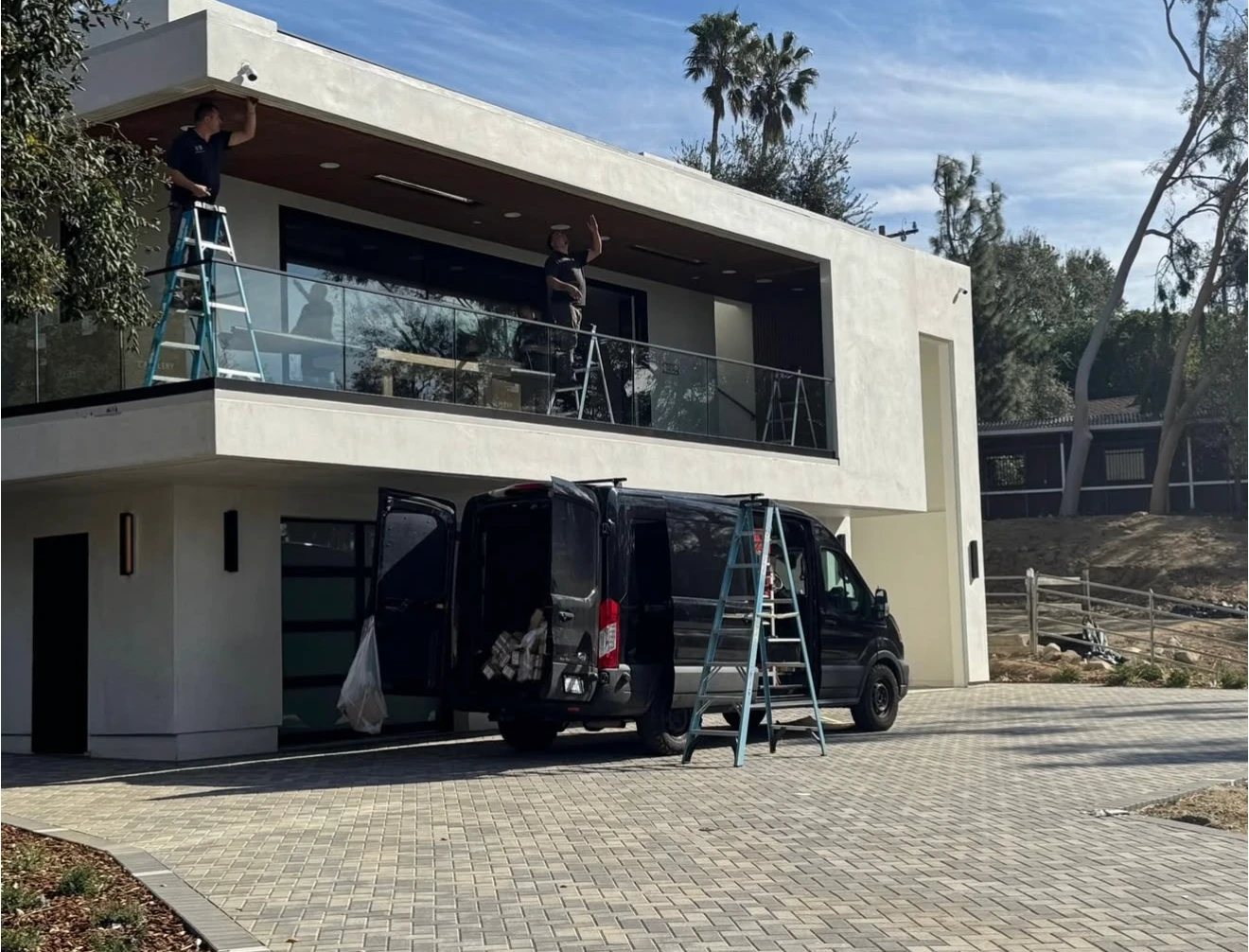
We measure, make and install it ourselves.
The person who measures your opening is the person who comes back to fit it. No subcontractor, no handover, nobody working from measurements they did not take.
- Samples held against your own view, at the hour the sun is a problem
- Span, tube, tracks and power worked out before we leave
- Built to your measurements, not cut down from a stock size
- Motor and sensors commissioned on the day, not left on defaults
Screens we have measured, made and hung.
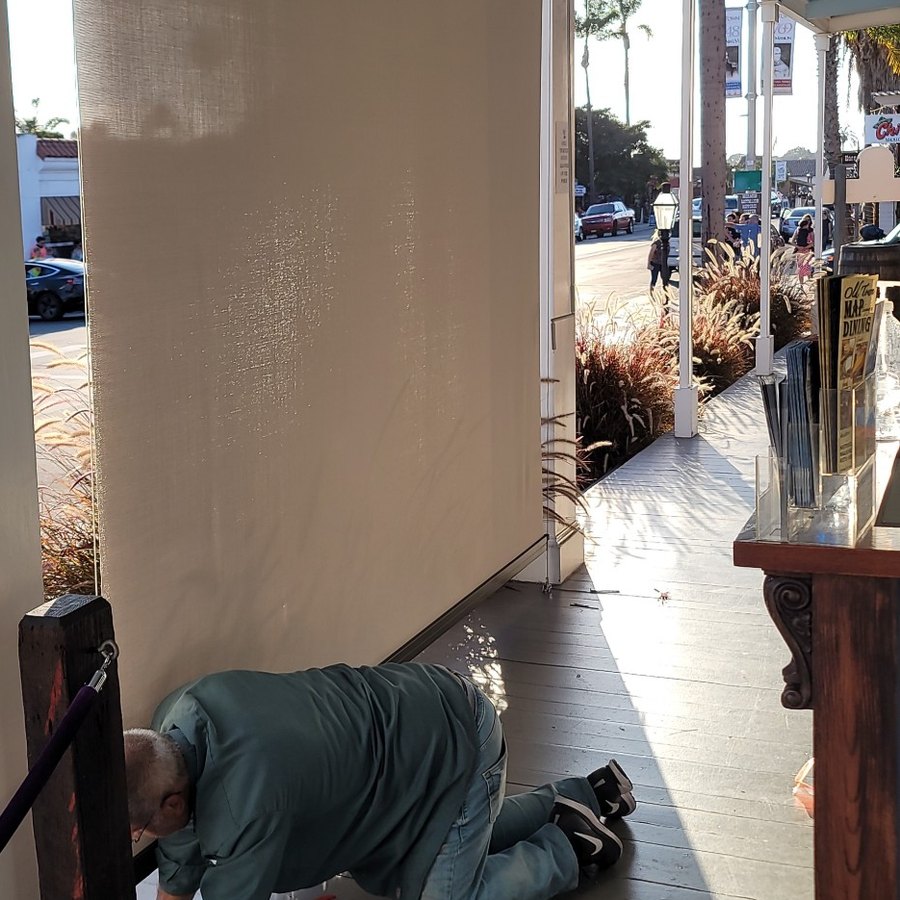
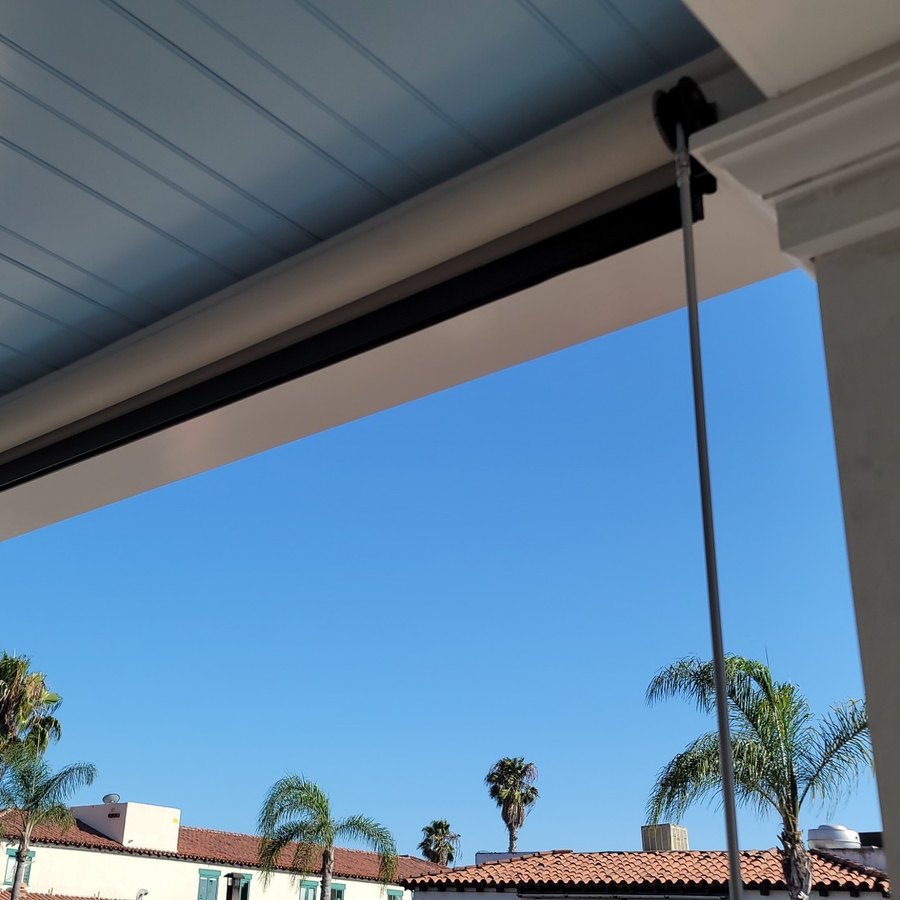
The fabric is held in a track down both edges, the whole way.
What it looks like coming down.
The fabric runs inside a track on both edges. That is what holds it flat across the opening and stops the wind from getting in behind it.
Several bays on one covered patio, each one made to its own opening.
Outdoors, the certification earns its keep.
We hold Somfy’s highest residential and commercial certification. Indoors that mostly buys a tidier install. Outdoors it means the shade knows when to get out of the way.
A shade bought online cannot do any of this, because nobody is there to set it up.
- A wind sensor that retracts the shade on its own, before a gust finds it
- Sun and timer control, so the patio shades itself at the hour it needs to
- Several shades on one command, or each one on its own
- Works with a remote, your phone, Alexa or Google Home
Working with builders, designers and landscape architects.
Exterior shades get chosen late and need to be thought about early. The pocket, the power and something solid to fix a track to all have to exist before the finishes go on.
Specified from drawings
Coordinated with the build
One crew, start to finish
We bring the mesh to your patio.
Tell us which way the opening faces and what the sun is doing. We come out at the hour it is actually a problem, hold the swatches against your own view, and quote from real measurements before we leave.
No obligation. We come to you. Across San Diego County.
Before you ask us
Will it survive the wind here?
How wide can one shade go?
Will I lose the view?
Can you motorise a shade I already have?
Do you do restaurants and offices?
Let us look at the opening.
Free, in your home, across San Diego County.